Hodi · Two-Way Community Engagement

Speak to a whole district. Then let it answer.

Multilingual SMS and recorded voice reaching every handset in a community, paired with a short code your people dial to ask for help, give feedback, ask a question or raise an alarm. No smartphone. No data bundle. No internet at the moment it matters most.

The Gap

Information arrives late, or in the wrong language, or not at all.

A farmer learns that the rains are coming when the rains arrive. A quarrel over a boundary builds for three weeks before anyone outside that community hears of it. A health campaign is announced in English to a community that thinks in Dagbani.

The tools to close these gaps are already in every pocket. Nearly every adult carries a phone, and almost none of them need a smartphone or a data bundle for the two oldest and most reliable channels on the network, SMS and USSD. They work on a fifteen-cedi handset. They work when the data network does not.

What they do not do on their own is listen. That is the half most services leave out, and it is the half we started from.

Hodi The call.
“May I come nearer?”
Karibu The answer.
“Welcome. Come.”

Long before any of this ran on a telephone network, the continent already had a protocol for it. You approach a home and you do not simply walk in. You call out, Hodi. From somewhere inside, the answer comes back, Karibu. Welcome. Come.

The same word serves at a well before you draw water, and in a crowd before you press through. In every case it asks one question, may I come nearer, and in every case it waits for an answer before it moves.

Two words, and a complete handshake. Permission asked and permission given, and only then does the real business begin. Nobody is walked in on. Nobody is spoken to who has not first agreed to listen, and the one inside is given their turn to speak.

That is the whole design of this platform, and it is why we have named it for them. Most messaging services in our sector are very good at Hodi and have no Karibu at all. They speak to communities at scale, in the right language, and then they stop. The community is left with no way to answer.

The answer is the half we refuse to leave out.

We are a Ghanaian firm and we have taken a Swahili name deliberately. Kiswahili is the most widely spoken language on the continent and a working language of the African Union, and the courtesy it describes is practised from Tamale to Tanga under one name or another. The problem this platform addresses does not belong to one country, so neither should the word for it.

Hodi · the call

Community Messaging

You choose who hears it. We deliver it in the language they actually speak, by text or by recorded voice for those who do not read. This is social and behaviour change communication that reaches past the literacy barrier.

  • Weather and planting advisories to farmers
  • Peace and calming messages before flashpoints
  • Health campaigns, immunisation and clinic days
  • Market prices, input availability, extension advice
  • Programme reminders, meeting notices, survey follow-ups
Karibu · the answer

Community Voice & Response

Anyone you serve dials a short code, walks a simple menu, and reaches you directly. The menu is built around your programme, so the community can say whatever your programme needs to hear.

  • Requests for support, a service or a repair
  • Feedback and complaints about a programme
  • Questions the community needs answered
  • Confidential safeguarding and misconduct reports
  • Early warning signals: conflict, flood, outbreak
  • Every entry tagged by district, type and urgency
Not Only Warnings

The line is open for whatever your programme needs to hear

An early warning line that only carries warnings sits silent for months, and a channel nobody uses is a channel nobody trusts when it finally matters. So the short code is not a warning line. It is your programme's front door, and warnings are one of the things that come through it.

A man in a Northern Ghanaian smock standing with his bicycle on a village road, speaking on a mobile phone
One short code, dialled from any handset, reaching the people who can act.

Requests for support

“The borehole at our end of the village has stopped.” “We need the extension officer.” A request routed to whoever handles it, with a reference the caller can quote later.

Feedback and complaints

The mechanism donors now expect of every programme, running on a channel people already know how to use, rather than a suggestion box on a wall.

Questions answered

“When is the next clinic day?” “Am I on the list?” Routine questions answered by the menu itself, without a single staff phone ringing.

Confidential reports

Safeguarding concerns, misconduct, aid diverted. Sensitive reports need a route that does not pass through the person being reported.

Early warning signals

Conflict triggers, flooding, disease. The reason we started, and still the reason the line must already be familiar before the day it is urgently needed.

Verification and polls

Confirm attendance, verify a delivery, run a three-question pulse check across a district in an afternoon.

The compliance case, stated plainly

Accountability to affected populations is no longer optional language in a proposal. Most major funders now expect a working feedback and complaints mechanism as a condition of the grant, and the Core Humanitarian Standard asks that complaints are welcomed, not merely permitted. Yet the common answer remains a locked box on a wall in a language half the community does not read, and a number that rings in an office nobody is paid to staff.

A short code answers the requirement properly, because it is free to the caller, works on the handset they already own, speaks their language, and produces a dated, referenced record of every contact and every response. It will therefore be prudent to budget for the mechanism you are already required to have, and to get a functioning channel for it rather than a compliance photograph.

Try It

One short code, shaped around your programme

A working simulation. Choose a programme type to see how the menu changes, then tap through it exactly as a community member would on the most basic handset. Nothing is sent, and no data leaves your device.

HODI
Enter a code
*713*45#

Works on any phone, on any network, with no internet.

Why a short code, and not an app

An app needs a smartphone, a data bundle, storage space, literacy in English, and the confidence to install something. A short code needs a phone that can make a call. In the districts where early warning matters most, that difference is the whole difference.

0 MB
Data needed to report
~30s
To complete a report
3
Networks reached
Any
Handset, however basic

The reporter is protected. Reports are received without publishing the sender's identity to the community. In a chieftaincy or land dispute, that protection is not a nicety, it is the reason someone is willing to report at all.

In Their Own Language

A message understood, not merely delivered

An advisory in English, sent to a community that thinks in Dagbani, has been delivered and not received. Tap a language to see the same weather advisory as the farmer would read it.

SustainAxis
Today 06:14
0 characters · 1 SMS Also sent as recorded voice
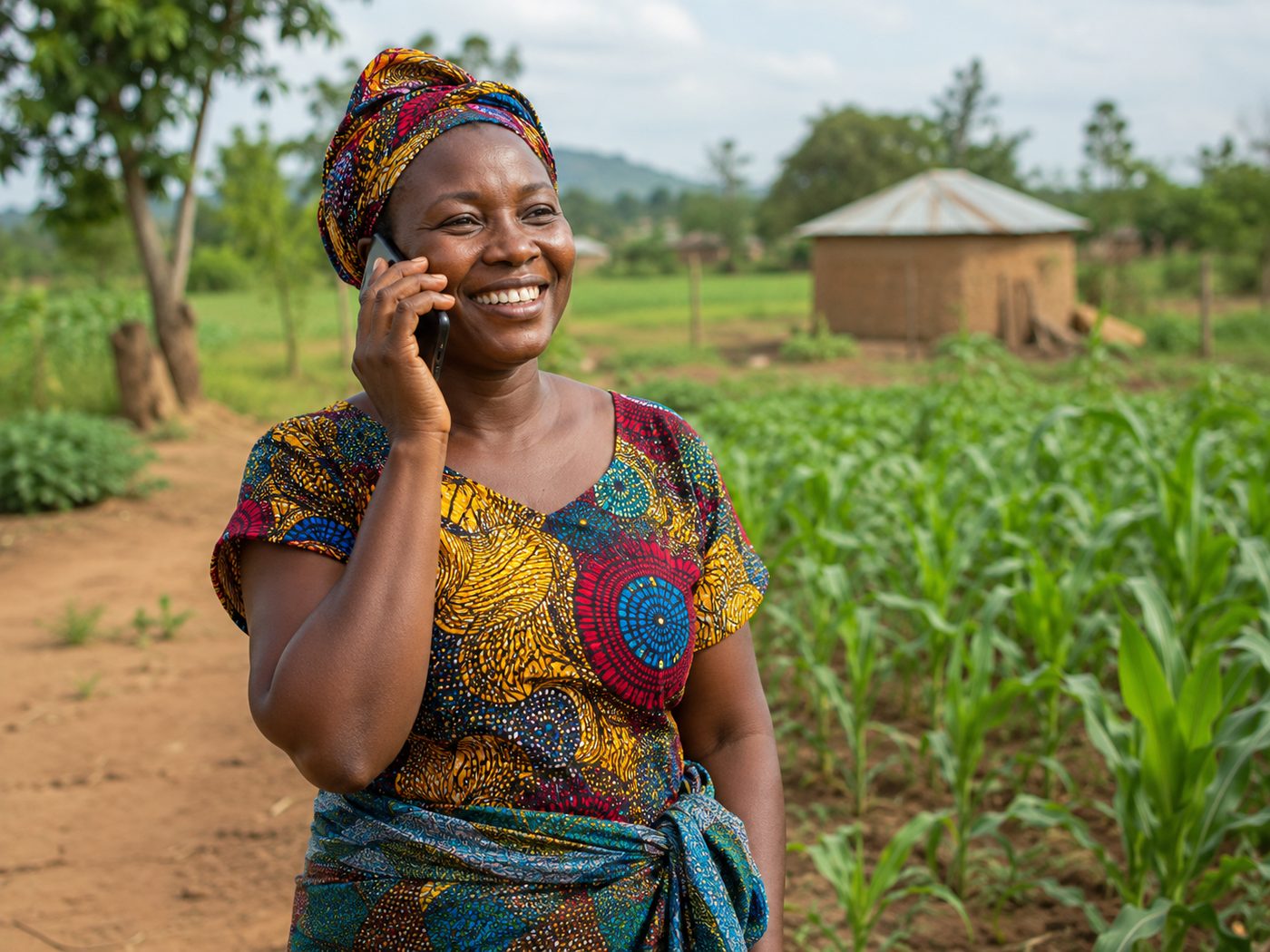
A woman farmer standing beside her maize field, listening to a call on her mobile phone

How language is handled

Every registered person records the language they want to hear from us in. A campaign is written once, then rendered per language group before sending, so one instruction reaches five language communities as five correct messages.

For communities where reading is uneven, the same advisory goes out as a short recorded voice call in the same language. A voice message needs no literacy at all.

Sample messages shown here are illustrative. All operational messages are written, checked and voiced by native speakers before any campaign is sent.

How It Works

From a signal in a village to a response that arrives

01

Register & consent

People enrol by phone number, district and language, and state what they agree to receive. Consent is recorded, and opting out is one word away.

02

Segment

An audience is drawn from the register. Every Dagbani-speaking farmer in one district. Every peace committee member in three. Only who needs to hear it.

03

Send

The message goes out as SMS, or as a recorded voice call, across MTN, Telecel and AirtelTigo, with delivery confirmed handset by handset.

04

Receive reports

The community reports back through the short code. Each report carries a type, a district and an urgency, and lands immediately with the response team.

05

Verify & respond

Reports are triaged and verified against other signals before anyone acts. A false alarm acted on carelessly can create the very conflict it warned of.

06

Learn

Every campaign and every report becomes M&E data. Delivery rates, response times, and which warnings preceded real incidents, feeding the next design.

Where It Serves

What organisations use it for

Climate & weather advisories

Rain, dry spell and storm warnings timed to the planting calendar, so a farmer decides to sow or to wait on information rather than on hope.

Peacebuilding & social cohesion

Calming messages before festivals, funerals and election periods, paired with a reporting channel that surfaces tension while it is still only tension.

Public health campaigns

Immunisation days, outbreak guidance, antenatal reminders and clinic schedules, delivered to the households a poster on a clinic wall never reaches.

Market & livelihood information

Prevailing prices, input availability and buyer presence, so smallholders arrive at the market already knowing what their harvest is worth.

Programme & M&E operations

Training reminders, survey follow-ups, and short mobile check-ins that lift response rates and cut the cost of chasing participants by phone.

Disaster & flood alerts

Spillage, flood and displacement warnings pushed to whole districts at once, with the reporting line open for what is happening on the ground.

Non-negotiable

Holding people's data in a place where it can cost them

We teach do-no-harm and data protection in our own M&E training. A service like this is where that teaching is tested, so the commitments are stated plainly and built into the design rather than added to a policy document afterwards.

Consent is explicit and revocable

Nobody is enrolled without agreeing, and every message carries a way out. Opting out is honoured immediately, not at the end of the campaign.

Reporter identity is shielded

Early warning reports reach the response team without exposing who sent them to the community they live in.

We collect only what we will use

Phone number, district, language and consent. Not ethnicity as a label, not political affiliation, not anything a leak could weaponise.

Verification before response

An unverified report is a rumour with a reference number. Reports are checked against other signals before a response is mounted.

Registered under Ghana's Data Protection Act

The register is operated under Ghanaian data protection law, held securely, never sold, never shared beyond the purpose it was collected for.

Complementing, not duplicating

National early warning structures already exist. This service is designed to feed and strengthen district-level response, not to compete with them.

Get Involved

Two ways in

Hodi is in its pilot phase and we are actively seeking partner organisations and pilot districts. Whether you want to commission a campaign or simply to receive alerts where you live, start here.

For NGOs, district assemblies, donors, health services and farmer organisations who want to reach a community, or open a reporting line in one.